
Teaching
Kyoto University
Please find an overview of my current courses at Kyoto University below.
The classes belong to the “Joint Degree Program in Transcultural Studies,” and some of them are also offered as part of the “Courses on Asian and Transcultural Studies” package (CATS), offered as part of Kyoto University’s FY2014 MEXT Top Global University Project (Japan Ministry of Education, Culture, Sports, Science and Technology; MEXT) “Kyoto University Japan Gateway Project.”
For further information, see the “Asian Platform for Global Sustainability and Transcultural Studies” (AGST).
Course material complementing the on-site course sessions can be accessed via PandA eLearning.
Transcultural Studies (Spring)
Foundations
Introduction to Transcultural Studies
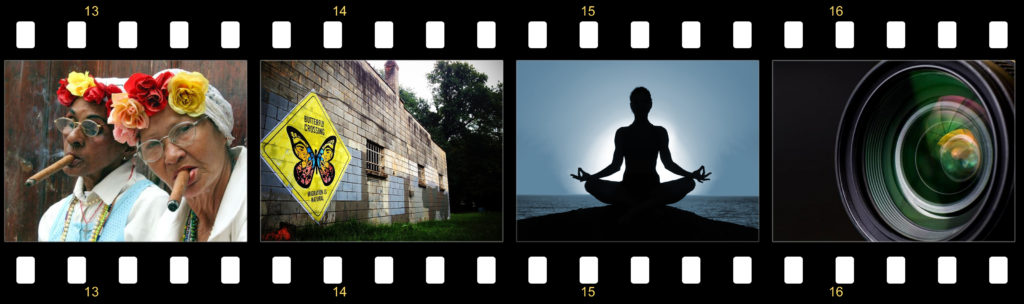
The concept of transculturality can be used both as a heuristic device (e.g. multi- perspectivity and multi-locality) and focus of study (e.g. cultural entanglements). It is embedded in a large and very heterogeneous landscape of theoretical and methodological approaches that come from various disciplines and cover different thematic, historical and geographic areas. Jointly conducted by four researchers from different disciplinary backgrounds, this course includes a lecture series combined with a discussion class (tutorium) and focuses on the contributions and limitations of inherited and current notions of transculturality. Focusing on three study areas, “Society, Economy and Governance,” “Knowledge, Belief and Religion” and “Visual, Media and Material Culture,” and the respective fields of research of the lecturers, theories and methods will be tested, e.g. in explorations of Japanese cinema, global “art” cinema and transcultural filmmaking practices, circular movements in the development of “Modern Postural Yoga,” and the relationship between patterns of migration and modes of institutionalization. The goal of the course is to introduce students to diverse disciplinary perspectives enabling them to frame their own studies of transcultural phenomena and perspectives.
Visual, Media and Material Culture (VMC)
Play, Transcultural: Interdisciplinary Game Studies 101

Game analysis, game studies, or ludography exemplify different names and approaches to the growing field of research on games and gaming. Studying the meaning of playing digital and analog games and their complexity as (trans-) cultural artifacts asks for combining new and old research tools from the humanities and social sciences — and more because gaming relates to many spheres of human activity. This practice-oriented and interactive seminar focuses on theoretical concepts and practical analytical techniques to engage transculturality in the cross-disciplinary research field of games.
The course engages questions of what makes a game, considering classics, such as Huizinga’s Homo Ludens and the often-misunderstood tool of the “magic circle” of play, taking cues from Wittgenstein’s family resemblance, and exploring the dynamic discourse of game design with Salen and Zimmerman’s Rules of Play. Primarily, we will deal with approaches to analyzing games as complex media artifacts that exist in being played. Thus, the course offers concrete step-by-step guidelines for researching the context, formal, narrative, and visual elements, and the interactive and immersive aspects of games. In this, we will also pay attention to community-building moments and border-crossing flows, questions of representation and appropriation.
Transcultural Studies (Fall)
Society, Economy and Governance (SEG)/Visual, Media and Material Culture (VMC)
Play, Advanced: Transcultural Game Studies 102

This practice-oriented and interactive seminar seeks to establish an understanding of theories of transculturality, interactivity, immersion, and user agency and various angles of valuable methodology for the study of games and gaming.
Extending and revisiting the course JK33001 “Play, Transcultural,” this class engages questions of what makes a game, considering classics, such as Huizinga’s Homo Ludens, taking cues from Wittgenstein’s family resemblance, and exploring the dynamic discourse of game design, incorporation (“immersion,” see Gordon Galleja’s In-Game), and bleed. Primarily, we will deal with approaches to analyzing games as complex media artifacts that “exist” only in being played. Thus, the course offers concrete step-by-step guidelines for researching the context, formal, narrative, and visual elements, and the ergodic (“interactive”) and immersive aspects of games. In this, we will also pay attention to community-building moments and border-crossing flows, questions of representation and appropriation.
Beyond Play: Game Design for Transcultural Learning
Educational game esign falls under labels like serious gaming or game-based learning so that the underlying approach seeks to create safe and immersive learning environments where the fun supports deep reflection and awareness-raising. The instructor has co-created games about social withdrawal (“hikikomori”) and neurominorities, where participants could learn through first-person experiences but metaphorically about the challenges of these groups with mainstream society. This course builds on the design principles behind these projects.
Taking cues from relational materialism and a transcultural approach to studying culture as ordering difference, this course offers a framework for analyzing societal actors, ranging from individuals to institutions and creating educational games about the interactions of these actors. The goal is to understand the decision-making as well as the mechanisms, embodiments, and performances employed by actors to reach their goals.
The picture of agents making a move and others a counter move, so that the outcome is not random chaos but that still no one has complete control, the metaphor of society or culture as some kind of game, framing social interactions as a game, asks to be taken seriously. Thus, this class includes a group project of designing a gaming simulation about a social or cultural conflict of the participants’ choosing, such as a card game about tourism and taxes or a role-play about climate change denial.